
Wie der österreichische Verfassungsschutz Assads Schreckensgeneral versteckte
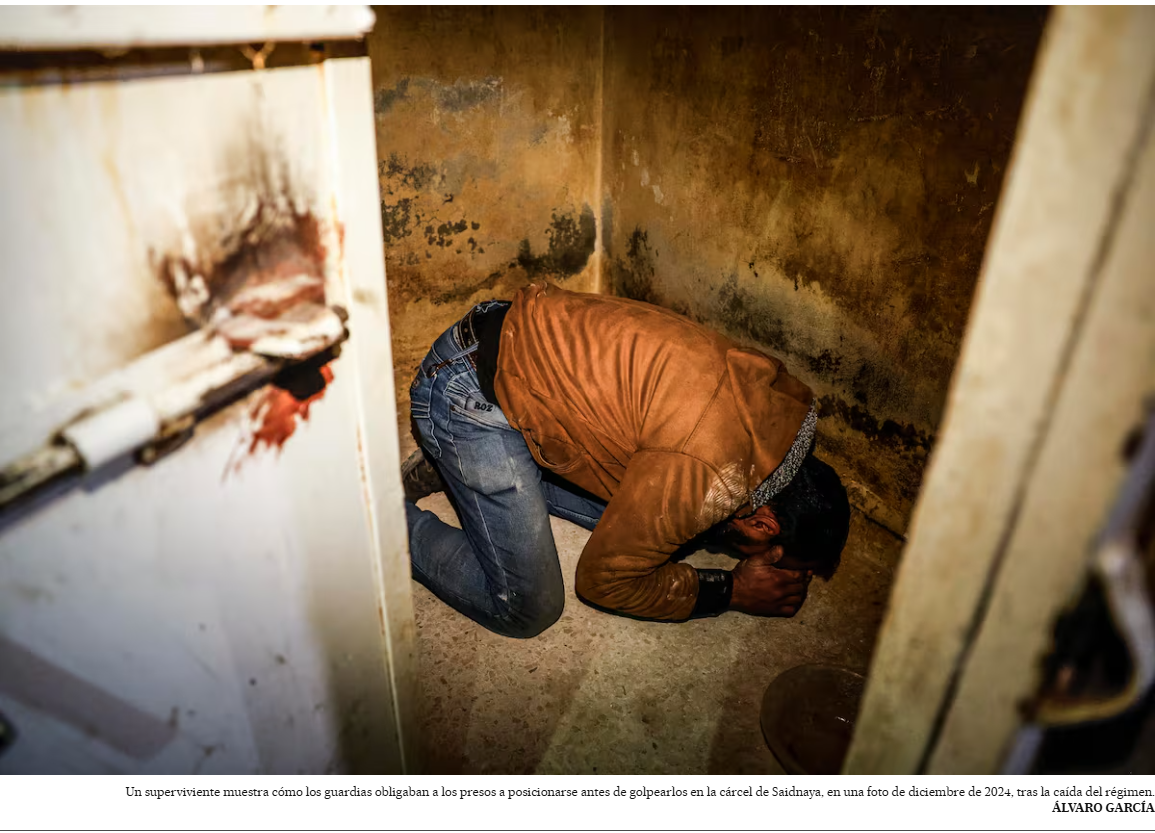
Der Spiegel reports on the failure of Austrian authorities to investigate and prosecute the highest-ranking Syrian regime member suspected of crimes against humanity and at large in Europe.
Read the full story here.
Der Spiegel reports on the failure of Austrian authorities to investigate and prosecute the highest-ranking Syrian regime member suspected of crimes against humanity and at large in Europe.
Read the full story here.
How a Syrian War Criminal and Double Agent Disappeared in Europe
The New Yorker investigates the circumstances surrounding the case of Khaled al-Halabi, the highest-ranking Syrian regime member suspected of crimes against humanity and known to be in Europe.
Read the full story here.
The New Yorker investigates the circumstances surrounding the case of Khaled al-Halabi, the highest-ranking Syrian regime member suspected of crimes against humanity and known to be in Europe.
Read the full story here.
CIJA Publishes its 2020-2021 Annual Report
CIJA is proud to present its 2020-2021 annual report and impressive achievements in evidence collection and support to criminal justice actors between April 2020 and March 2021. Along with a detailed outline of CIJA’s operational results, the report offers a comprehensive overview of our six-year programme in Northern Iraq, which concluded successfully in March 2021. To mark the extraordinary work of its Islamic State teams, CIJA is, for the first time, sharing summaries of key legal briefs in its collection showcasing the wealth of evidence collected during the course of CIJA operations in Northern Iraq and Syria.
CIJA is proud to present its 2020-2021 annual report and impressive achievements in evidence collection and support to criminal justice actors between April 2020 and March 2021. Along with a detailed outline of CIJA’s operational results, the report offers a comprehensive overview of our six-year programme in Northern Iraq, which concluded successfully in March 2021. To mark the extraordinary work of its Islamic State teams, CIJA is, for the first time, sharing summaries of key legal briefs in its collection showcasing the wealth of evidence collected during the course of CIJA operations in Northern Iraq and Syria.
Spinning Bomb
In an in-depth piece for Index on Censorship, CIJA Director Nerma Jelacic dissects the logic of revisionism, the institutions that enable it, and the perils of leaving disinformation and war crimes denialism unchallenged.
Read the article here
In an in-depth piece for Index on Censorship, CIJA Director Nerma Jelacic dissects the logic of revisionism, the institutions that enable it, and the perils of leaving disinformation and war crimes denialism unchallenged.
Read the article here
CIJA Senior Advisor Stephanie Barbour contributes to symposium on conflict-related sexual violence
CIJA Senior Sexual and Gender-based Violence Advisor Stephanie Barbour has contributed to a symposium on conflict-related sexual violence jointly hosted by the UN Team of Experts on Rule of Law and Sexual Violence in Conflict and OpinioJuris. Drawing on her recent article in the Journal of International Criminal Justice, Barbour discusses CIJA’s investigative and analytical approaches to Islamic State enslavement practices.
Part I of the blog post explores innovations, lessons learned, and good practices from CIJA’s investigation into the IS slave trade. Barbour addresses the challenges of investigating the slave trade of women and children by IS in Northern Iraq and Syria and outlines the elements of CIJA´s large-scale situational investigation model, which enabled the collection of critical multi-layered, corroborative evidence of IS enslavement practices.
In Part II, Barbour discusses CIJA’s approach to the legal characterisation of IS enslavement practices and the importance of these labels for capturing the multiple harms that have been inflicted on victims. Barbour follows with an appraisal of recent prosecutorial approaches to SGBV charging in extraterritorial cases concerning IS and Syrian Regime crimes, including in the Al-Khatib trial in Koblenz, Germany. The two-part post closes by emphasising the importance of continued exchanges between investigators and prosecutors working across jurisdictions on how to make the best use of available evidence and find appropriate legal qualifications for the multiplicity of SGBV-related crimes observed in the Syria and Iraq conflicts.
The symposium builds on a recent discussion hosted by the UN Team of Experts held in January 2021 and entitled “The importance of a label: understanding the impunity gap for conflict-related sexual violence crimes associated with slavery and trafficking”.
Read Part I here: Innovations, Lessons Learned, and Good Practices From CIJA’s Investigation Into the Slave Trade
Read Part II here: Key findings of CIJA’s Investigation into the IS Slave Trade
CIJA Senior Sexual and Gender-based Violence Advisor Stephanie Barbour has contributed to a symposium on conflict-related sexual violence jointly hosted by the UN Team of Experts on Rule of Law and Sexual Violence in Conflict and OpinioJuris. Drawing on her recent article in the Journal of International Criminal Justice, Barbour discusses CIJA’s investigative and analytical approaches to Islamic State enslavement practices.
Part I of the blog post explores innovations, lessons learned, and good practices from CIJA’s investigation into the IS slave trade. Barbour addresses the challenges of investigating the slave trade of women and children by IS in Northern Iraq and Syria and outlines the elements of CIJA´s large-scale situational investigation model, which enabled the collection of critical multi-layered, corroborative evidence of IS enslavement practices.
In Part II, Barbour discusses CIJA’s approach to the legal characterisation of IS enslavement practices and the importance of these labels for capturing the multiple harms that have been inflicted on victims. Barbour follows with an appraisal of recent prosecutorial approaches to SGBV charging in extraterritorial cases concerning IS and Syrian Regime crimes, including in the Al-Khatib trial in Koblenz, Germany. The two-part post closes by emphasising the importance of continued exchanges between investigators and prosecutors working across jurisdictions on how to make the best use of available evidence and find appropriate legal qualifications for the multiplicity of SGBV-related crimes observed in the Syria and Iraq conflicts.
The symposium builds on a recent discussion hosted by the UN Team of Experts held in January 2021 and entitled “The importance of a label: understanding the impunity gap for conflict-related sexual violence crimes associated with slavery and trafficking”.
Read Part I here: Innovations, Lessons Learned, and Good Practices From CIJA’s Investigation Into the Slave Trade
Read Part II here: Key findings of CIJA’s Investigation into the IS Slave Trade
Berlin Group 21, 'Ivan's' Emails and Chemical Weapons Conspiracy Theories
Supported by the findings of CIJA’s probe into Syria disinformation networks, Bellingcat reports on the working methods of yet another group in the far-reaching web of actors targeting Syria accountability groups – Berlin Group 21. Read more about the latest revelations stemming from CIJA’s investigation here.
Supported by the findings of CIJA’s probe into Syria disinformation networks, Bellingcat reports on the working methods of yet another group in the far-reaching web of actors targeting Syria accountability groups – Berlin Group 21. Read more about the latest revelations stemming from CIJA’s investigation here.
CIJA on the Foreign Office Podcast
CIJA Director Nerma Jelacic speaks to Michael Weiss about the motivation behind CIJA’s investigation into a Russian-back disinformation network on Syria and discusses the significance of its findings.
Listen here
CIJA Director Nerma Jelacic speaks to Michael Weiss about the motivation behind CIJA’s investigation into a Russian-back disinformation network on Syria and discusses the significance of its findings.
Listen here
How an Email Sting Operation Unearthed a pro-Assad Conspiracy—and Russia’s Role In It
Newlines Magazine has published an extensive report on the web of actors uncovered by CIJA to be part of a highly orchestrated disinformation campaign against the OPCW and their investigations into war crimes in Syria.
Read Michael Weiss and Jett Goldsmith’s reporting on CIJA’s probe into the Working Group on Syria, Propaganda and the Media and their allies in Russian diplomatic missions around the world and lawyers working at the heart of international justice institutions.
Newlines Magazine has published an extensive report on the web of actors uncovered by CIJA to be part of a highly orchestrated disinformation campaign against the OPCW and their investigations into war crimes in Syria.
Read Michael Weiss and Jett Goldsmith’s reporting on CIJA’s probe into the Working Group on Syria, Propaganda and the Media and their allies in Russian diplomatic missions around the world and lawyers working at the heart of international justice institutions.
Syria Chemical-Attack Deniers Admit Links to WikiLeaks and Russia
The Daily Beast reports on further findings of CIJA’s probe into the so-called Working Group on Syria, Propaganda and the Media’s disinformation campaign against organisations collecting battlefield evidence of war crimes in Syria – OPCW, White Helmets, and now CIJA.
Read Michael Weiss and Jett Goldsmith’s exposé to find out how their efforts were coordinated with Russian diplomats and aided by WikiLeaks and Hague-based lawyers.
The Daily Beast reports on further findings of CIJA’s probe into the so-called Working Group on Syria, Propaganda and the Media’s disinformation campaign against organisations collecting battlefield evidence of war crimes in Syria – OPCW, White Helmets, and now CIJA.
Read Michael Weiss and Jett Goldsmith’s exposé to find out how their efforts were coordinated with Russian diplomats and aided by WikiLeaks and Hague-based lawyers.
CIJA Joins Call for Greater Accountability for Atrocities in Syria
On the eve of next week’s Conference of the States Parties of the Organisation for the Prohibition of Chemical Weapons (OPCW), CIJA has joined 14 Syrian and international organisations urging states to adopt enhanced justice and accountability measures in response to atrocity crimes in Syria.
Signatories call on states to “explore individual and collective options to hold more perpetrators to account—by widening the scope of criminal jurisdiction, providing greater resources for victim and witness protection, greater resources for war crimes prosecutors, and considering the creation of a treaty-based tribunal for Syria”. While the statement acknowledges recent advances towards criminal-justice accountability, such as the first crimes against humanity verdict against a former Syrian Regime member, it stresses that “justice is still not commensurate to the injustices suffered” by the Syrian people. The joint statement further urges that states demand immediate release of detainees from Regime detention centres and information on the fates of disappeared persons, while supporting measures to provide greater psychological support for survivors.
At the upcoming OPCW session, states parties will discuss a 46-state backed proposal to suspend Syria’s rights and privileges in the organisation over its use of chemical weapons. The Assad Regime’s responsibility for chemical weapons attacks has been investigated by the OPCW’s Investigation and Identification Team (IIT). CIJA is proud to have assisted the IIT by providing evidentiary and analytical materials in support of the Team’s first investigation and subsequent report on the role of the Syrian Arab Air Force in the incidents in Ltamenah, Syria in March 2017.
CIJA has been conducting criminal investigations in Syria since 2011. Thus far, CIJA has collected over one million pages of Syrian regime documentation and it is currently supporting thirty-two law enforcement agencies from over a dozen democratic countries in addition to a number of multilateral bodies. CIJA’s evidence and testimony have been used in five completed trials pertaining to both Syrian regime and Islamic State criminality. Additionally, CIJA is currently assisting fifteen ongoing investigations by law enforcement agencies.
Read the full statement here: Joint Statement in Advance of the 25th Session of the Conference of the States Parties of the Organisation for the Prohibition of Chemical Weapons (OPCW)
On the eve of next week’s Conference of the States Parties of the Organisation for the Prohibition of Chemical Weapons (OPCW), CIJA has joined 14 Syrian and international organisations urging states to adopt enhanced justice and accountability measures in response to atrocity crimes in Syria.
Signatories call on states to “explore individual and collective options to hold more perpetrators to account—by widening the scope of criminal jurisdiction, providing greater resources for victim and witness protection, greater resources for war crimes prosecutors, and considering the creation of a treaty-based tribunal for Syria”. While the statement acknowledges recent advances towards criminal-justice accountability, such as the first crimes against humanity verdict against a former Syrian Regime member, it stresses that “justice is still not commensurate to the injustices suffered” by the Syrian people. The joint statement further urges that states demand immediate release of detainees from Regime detention centres and information on the fates of disappeared persons, while supporting measures to provide greater psychological support for survivors.
At the upcoming OPCW session, states parties will discuss a 46-state backed proposal to suspend Syria’s rights and privileges in the organisation over its use of chemical weapons. The Assad Regime’s responsibility for chemical weapons attacks has been investigated by the OPCW’s Investigation and Identification Team (IIT). CIJA is proud to have assisted the IIT by providing evidentiary and analytical materials in support of the Team’s first investigation and subsequent report on the role of the Syrian Arab Air Force in the incidents in Ltamenah, Syria in March 2017.
CIJA has been conducting criminal investigations in Syria since 2011. Thus far, CIJA has collected over one million pages of Syrian regime documentation and it is currently supporting thirty-two law enforcement agencies from over a dozen democratic countries in addition to a number of multilateral bodies. CIJA’s evidence and testimony have been used in five completed trials pertaining to both Syrian regime and Islamic State criminality. Additionally, CIJA is currently assisting fifteen ongoing investigations by law enforcement agencies.
Read the full statement here: Joint Statement in Advance of the 25th Session of the Conference of the States Parties of the Organisation for the Prohibition of Chemical Weapons (OPCW)
Mayday Podcast: The Evidence Gatherers
The BBC’s Chloe Hadjimatheou spoke with Bill Wiley and Nerma Jelacic about CIJA’s probe into disinformation networks attempting to discredit Syria accountability efforts.
Listen to the podcast here
The BBC’s Chloe Hadjimatheou spoke with Bill Wiley and Nerma Jelacic about CIJA’s probe into disinformation networks attempting to discredit Syria accountability efforts.
Listen to the podcast here
The sting: How a Canadian is fighting back in Syria’s high-stakes disinformation war
Executive Director Bill Wiley speaks with The Globe and Mail about CIJA’s probe into disinformation networks attempting to discredit the work of his organisation and others seeking accountability in Syria.
Read the full story here
Executive Director Bill Wiley speaks with The Globe and Mail about CIJA’s probe into disinformation networks attempting to discredit the work of his organisation and others seeking accountability in Syria.
Read the full story here
The UK professor, a fake Russian spy and the undercover Syria sting
Director Nerma Jelacic speaks to The Observer about CIJA’s inquiry into disinformation networks that seek to discredit Syria accountability efforts.
Read the full story here
Director Nerma Jelacic speaks to The Observer about CIJA’s inquiry into disinformation networks that seek to discredit Syria accountability efforts.
Read the full story here
CIJA Statement on the Syria Disinformation Campaign
بالعربية
The Commission for International Justice and Accountability (CIJA) is proud to report that it has concluded a probe into the disinformation networks which have increasingly threatened to derail fragile Syria accountability efforts through misinformation, lies and revisionism.
CIJA’s inquiry uncovered the extraordinary degrees of deception these disinformation networks are willing to go to in order to achieve their goal of whitewashing the egregious crimes committed by the regime of Bashar al-Assad. It also exposed a surprising array of individuals who have recklessly served to amplify certain of the core allegations of the disinformation network – persons who are not themselves assessed by CIJA as being apologists for the Assad regime, and are in some instances working in the field of international criminal and humanitarian law.
Amongst other things, the CIJA inquiry revealed that the disinformation networks:
admit privately to fabricating sources and information in order to create the impression of well-researched and evidence-based reports;
coordinate their work with, and take instructions from, Russian diplomats and other representatives of the Russian state;
are engaged in a tightly controlled and orchestrated campaign to denigrate the findings of the Organisation for the Prohibition of Chemical Weapons (OPCW), with proactive assistance from Hague-based lawyers providing pro bono counsel on how to wage lawfare against the increasingly damning findings of the OPCW with respect to Syrian regime chemical attacks; and
are prepared to ask apparent agents of foreign states to support their research efforts, and even to attack their foes.
CIJA was only the latest target of this disinformation campaign. Over the last five years, Russia and various proxies in the west have pursued a vicious disinformation war against individuals and groups undertaking humanitarian as well as accountability efforts in Syria. The most prominent targets of this campaign have been the Syrian White Helmets, Mayday Rescue and the OPCW.
In November 2020, CIJA was advised implicitly by the so-called Working Group on Syria, Propaganda and Media – a leading pro-Moscow and pro-Damascus disinformation network – that CIJA and its Executive Director would be the next targets of its long-running disinformation campaign. In response, CIJA launched its probe, the primary objective of which was to protect the security of CIJA’s witnesses, sensitive sources, its personnel and their families.
The said inquiry was undertaken by lawful means during the period 01 December 2020 to 14 March 2021.
CIJA’s major security concerns were confirmed when a former senior CIJA consultant disclosed to the Working Group and its allies highly sensitive details regarding the extended families – including the children – of CIJA personnel, as well as the names of myriad operational and administrative staff. From a CIJA perspective, this discovery alone demanded the initiation of an inquiry.
The risks that CIJA personnel face are real, not perceived. Documents originating from Syrian security intelligence in the possession of CIJA and other information show that Damascus and states with known Assad sympathies are interested in locating CIJA personnel and facilities. In response to such threats, the CIJA is necessarily committed to protecting by all lawful means its witnesses, sources, personnel, mandate and reputation. This effort requires CIJA to expose those who persist in doing the unconscionable bidding of Moscow, Damascus and their allies in Syria, whether consciously or recklessly. CIJA is obliged morally and ethically to proceed in solidarity with the victims of the Working Group and its partners’ disinformation, including the White Helmets, Mayday Rescue, the OPCW, and James Le Mesurier, whom many of us knew as a friend.
Over the decade of conflict in Syria, CIJA has helped extract to safety activists who found themselves in harm’s way inside Syria. CIJA has done so quietly and without need for recognition. The rising influence of disinformation networks and their impact on Syrian victims and survivors require a strong and unified response by those who stand for human rights and accountability. The information gathered during this probe will be provided to relevant authorities such that appropriate measures can be taken.
CIJA’s solidarity with those who undertake crucial humanitarian, accountability and criminal justice work in Syria, and its determination to fight disinformation networks and their enablers, is now a matter of public record.
About the CIJA
CIJA has been conducting criminal investigations in Syria since 2011. While for security reasons we kept a lower public profile than is usual for an NGO, our work has had high impact where it matters the most: securing evidence and ensuring that this material supports the efforts of western law enforcement to hold perpetrators accountable. Thus far, CIJA has collected over one million pages of Syrian regime documentation and it is currently supporting thirty-two law enforcement agencies from over a dozen democratic countries. CIJA’s evidence and testimony have been used in five completed trials pertaining to both Syrian regime and Islamic State criminality. Additionally, CIJA is currently assisting fifteen ongoing investigations by law enforcement agencies. Overall, since 2016 CIJA has responded to requests for assistance from national authorities pertaining to over 2,000 suspects. For more about CIJA’s work go to www.cijaonline.org
26 March 2021
بالعربية
The Commission for International Justice and Accountability (CIJA) is proud to report that it has concluded a probe into the disinformation networks which have increasingly threatened to derail fragile Syria accountability efforts through misinformation, lies and revisionism.
CIJA’s inquiry uncovered the extraordinary degrees of deception these disinformation networks are willing to go to in order to achieve their goal of whitewashing the egregious crimes committed by the regime of Bashar al-Assad. It also exposed a surprising array of individuals who have recklessly served to amplify certain of the core allegations of the disinformation network – persons who are not themselves assessed by CIJA as being apologists for the Assad regime, and are in some instances working in the field of international criminal and humanitarian law.
Amongst other things, the CIJA inquiry revealed that the disinformation networks:
admit privately to fabricating sources and information in order to create the impression of well-researched and evidence-based reports;
coordinate their work with, and take instructions from, Russian diplomats and other representatives of the Russian state;
are engaged in a tightly controlled and orchestrated campaign to denigrate the findings of the Organisation for the Prohibition of Chemical Weapons (OPCW), with proactive assistance from Hague-based lawyers providing pro bono counsel on how to wage lawfare against the increasingly damning findings of the OPCW with respect to Syrian regime chemical attacks; and
are prepared to ask apparent agents of foreign states to support their research efforts, and even to attack their foes.
CIJA was only the latest target of this disinformation campaign. Over the last five years, Russia and various proxies in the west have pursued a vicious disinformation war against individuals and groups undertaking humanitarian as well as accountability efforts in Syria. The most prominent targets of this campaign have been the Syrian White Helmets, Mayday Rescue and the OPCW.
In November 2020, CIJA was advised implicitly by the so-called Working Group on Syria, Propaganda and Media – a leading pro-Moscow and pro-Damascus disinformation network – that CIJA and its Executive Director would be the next targets of its long-running disinformation campaign. In response, CIJA launched its probe, the primary objective of which was to protect the security of CIJA’s witnesses, sensitive sources, its personnel and their families.
The said inquiry was undertaken by lawful means during the period 01 December 2020 to 14 March 2021.
CIJA’s major security concerns were confirmed when a former senior CIJA consultant disclosed to the Working Group and its allies highly sensitive details regarding the extended families – including the children – of CIJA personnel, as well as the names of myriad operational and administrative staff. From a CIJA perspective, this discovery alone demanded the initiation of an inquiry.
The risks that CIJA personnel face are real, not perceived. Documents originating from Syrian security intelligence in the possession of CIJA and other information show that Damascus and states with known Assad sympathies are interested in locating CIJA personnel and facilities. In response to such threats, the CIJA is necessarily committed to protecting by all lawful means its witnesses, sources, personnel, mandate and reputation. This effort requires CIJA to expose those who persist in doing the unconscionable bidding of Moscow, Damascus and their allies in Syria, whether consciously or recklessly. CIJA is obliged morally and ethically to proceed in solidarity with the victims of the Working Group and its partners’ disinformation, including the White Helmets, Mayday Rescue, the OPCW, and James Le Mesurier, whom many of us knew as a friend.
Over the decade of conflict in Syria, CIJA has helped extract to safety activists who found themselves in harm’s way inside Syria. CIJA has done so quietly and without need for recognition. The rising influence of disinformation networks and their impact on Syrian victims and survivors require a strong and unified response by those who stand for human rights and accountability. The information gathered during this probe will be provided to relevant authorities such that appropriate measures can be taken.
CIJA’s solidarity with those who undertake crucial humanitarian, accountability and criminal justice work in Syria, and its determination to fight disinformation networks and their enablers, is now a matter of public record.
About the CIJA
CIJA has been conducting criminal investigations in Syria since 2011. While for security reasons we kept a lower public profile than is usual for an NGO, our work has had high impact where it matters the most: securing evidence and ensuring that this material supports the efforts of western law enforcement to hold perpetrators accountable. Thus far, CIJA has collected over one million pages of Syrian regime documentation and it is currently supporting thirty-two law enforcement agencies from over a dozen democratic countries. CIJA’s evidence and testimony have been used in five completed trials pertaining to both Syrian regime and Islamic State criminality. Additionally, CIJA is currently assisting fifteen ongoing investigations by law enforcement agencies. Overall, since 2016 CIJA has responded to requests for assistance from national authorities pertaining to over 2,000 suspects. For more about CIJA’s work go to www.cijaonline.org
26 March 2021
March 26, 2021
The UK professor and the fake Russian agent
The BBC reports on CIJA’s months-long investigation into Syria disinformation networks that targeted the organisation and its personnel.
Read the full story here
The BBC reports on CIJA’s months-long investigation into Syria disinformation networks that targeted the organisation and its personnel.
Read the full story here
Edinburgh professor gave names to fake Russia spy
A University of Edinburgh professor and a member of the so-called Working Group on Syria, Propaganda and Media admits to coordinating with Russian diplomats, attempting to undermine the trial in Germany of two former Syrian officials prosecuted for torture offences. The Times reports on CIJA´s probe into the far-reaching efforts to discredit and derail Syria accountability efforts.
Read the full story here
A University of Edinburgh professor and a member of the so-called Working Group on Syria, Propaganda and Media admits to coordinating with Russian diplomats, attempting to undermine the trial in Germany of two former Syrian officials prosecuted for torture offences. The Times reports on CIJA´s probe into the far-reaching efforts to discredit and derail Syria accountability efforts.
Read the full story here
To Russia with Love
Der Spiegel reports on efforts by a group of UK university professors to “spread propaganda under the guise of science” in bid to discredit humanitarian workers and deny mass murder.
Read the full story here
Der Spiegel reports on efforts by a group of UK university professors to “spread propaganda under the guise of science” in bid to discredit humanitarian workers and deny mass murder.
Read the full story here
CIJA Executive Director Bill Wiley on the Future of International Criminal Justice
In an op-ed published by Open Canada, CIJA Executive Director Bill Wiley discusses the decline in multilateral approaches to international criminal justice and the consequences it carries for achieving accountability for core international crimes committed in Syria.
Read More: War in Syria and the uncertain future of international criminal justice - Open Canada
In an op-ed published by Open Canada, CIJA Executive Director Bill Wiley discusses the decline in multilateral approaches to international criminal justice and the consequences it carries for achieving accountability for core international crimes committed in Syria.
Read More: War in Syria and the uncertain future of international criminal justice - Open Canada
CIJA Syria Investigators Reflect on a Decade of Conflict
Over fifty Syrian men and women lie at the core of CIJA’s success. Their work has made possible unprecedented efforts to secure linkage evidence from within Syria – the evidence necessary to identify those individuals most responsible for a range of atrocity crimes committed over the past decade of conflict. Their names are unknown to the world, their identities – indefinitely, stringently concealed. And yet, under this operational cover, they are Syrians who by virtue of their work have played a crucial role in four criminal trials concluded to date, and who continue to work inside Syria in support of CIJA’s 37 law enforcement partners throughout Europe and North America. Their work exposes them to real dangers, exacts real sacrifice. In the words of CIJA Executive Director Bill Wiley, “every success that CIJA enjoys is ultimately attributable to their efforts.”
CIJA now works in a handful of other conflict and post-conflict zones, but Syria provided the foundation for a new vision of international criminal justice – one premised on the idea that a non-governmental body could conduct investigations to a criminal evidence standard in the midst of high-intensity conflict. The result, as described by the Chair of CIJA’s Board of Commissioners Stephen Rapp, is evidence as rich, if not richer, than that the Allied powers had available for the Holocaust cases.
CIJA’s Syrian investigators have selflessly dedicated their lives to the pursuit of justice and accountability in total anonymity with little likelihood for public recognition of their sacrifice. Some have been relocated for safety reasons, others who testified in European trials have entered witness protection. They possess unique perspectives on the past decade of conflict and the role of criminal investigations in realising justice and accountability.
On the tenth anniversary of the Syrian uprising, CIJA sought to preserve the reflections of its Syrian investigators. In striking detail and breadth of feeling, investigators described the nature and evolution of their motivation to remain in the fight for accountability, the stakes and toll of their work, and the outcomes they hope it achieves.
“We never despaired”
Many of CIJA’s Syrian investigators have been with the organisation since its founding, working tirelessly from the dawn of the conflict and through its darkest episodes to this day. Reflecting on its beginnings, one of these investigators recalls that, “during our first meeting with the Commission in 2012, we expected that the path to justice would be short, that at any moment Bashar al-Assad would be in prison along with all those who stood by him”. In CIJA’s mandate – to collect, preserve and analyse evidence of core international crimes in service of criminal-justice accountability – investigators found a calling that rose to the principles of the popular uprising: “the aspiration to change the painful reality in which the Syrian people have lived for a long time…[the] pursuit of justice and the most basic human rights that are enshrined in international laws.”
Yet, the ensuing conflict would see these hopes and aspirations deferred by the large-scale devastation and cruelty that the Syrian Regime wrought upon the civilian population – “by destroying the educational and medical infrastructure and sectors, using the army and security branches to suppress the demonstrations and torture people, in violation of all the principles of international law, while insisting on killing innocent civilians who opposed the Regime and demanded freedom and dignity.”
While CIJA’s investigators bore witness to widespread and systematic violations of international law, they spared no effort to collect and preserve the evidence that would one day bring those responsible to account.
In the years that followed, through regular training and mentoring from international experts, CIJA’s Syrian investigators secured and extracted over 1.3 million original documents and collected thousands of witness interviews. This evidence has been crucial for establishing the criminal conduct and individual criminal responsibility of mid- and high-ranking Syrian Regime and IS members for ongoing atrocities committed across the country – an archive of war crimes evidence, the volume and quality of which is unprecedented. As a result of their work, steps toward accountability are starting to be realised through investigations, trials and verdicts across Europe and North America, which have drawn extensively on materials collected by CIJA investigators and the evidentiary information therein.
“Justice will be a victory for humanity, and for the world"
While the tenth anniversary of the uprising is a painful reminder that the path to justice is long, CIJA’s investigators also see the passage of time as a testament to the persistence of the Syrian people: “The anniversary shows that the Syrians who have chosen the path of freedom will not back down from that path even if they lose their lives, and they will keep going until they achieve their freedom and live with dignity”.
Today, they remain resolute in their work, impelled by an understanding that “without achieving justice and conducting trials, no sustainable peace can exist in Syria.” Emphasising the role of fair criminal trials, CIJA investigators hold that securing accountability for the crimes committed in Syria will not only offer recognition for the suffering of the Syrian people, but also set an important example for the rest of the world. In the words of one investigator: “I dream of seeing the criminals punished by law through fair trials, so that the world can realise that no criminal can escape punishment.” Their wish, another tells us, “is for international justice to take its course by prosecuting the criminals who wantonly perpetrated grave violations against the Syrian people. Justice will heal the wounds and relieve the pain of the mothers, the wives and the children who lost their loved ones because of the criminal methods of oppression practiced by the security organisations in Syria. Justice will be a victory for humanity, and for the world."
“A historical and humanitarian responsibility”
And yet, how does one carry forth the work of justice and accountability in the face of intractable conflict and inexplicable levels of loss? The reflections of CIJA’s investigators reveal a fortitude that runs deep not despite of but because of the toll their work takes. They reveal a motivation rooted not just in a belief in the potential of international justice but in a personal responsibility towards victims and survivors, towards family and loved ones, to hold those responsible for their suffering to account.
For one investigator, to carry forth means “to stop for a minute everyday and remember the innocent blood that flowed for freedom, and the many friends who died for believing in freedom. It means that I do not stop thinking about the innocent detainees who are still suffering from the worst conditions of detention in history...it means continuing the struggle despite the fatigue.” For another, their work is part of a struggle larger still – “the rejection of all forms of tyranny in the world despite all the harm my family and I have suffered.”
In the opinions of investigators, international justice remains the path through which their aspirations and those of the popular uprising can be realised. For them, working toward accountability is a “historical and humanitarian responsibility”, “a moral duty”. Despite the slow progress toward a reality in which accountability for Syria is achieved, victories secured through trials and prosecutions in European courts fuel their determination: “we are becoming more and more insistent, after seeing the fruit of the distinguished work carried out by the team, and the success of our efforts.” Ultimately, one investigator remarked, “there are many examples in history of achieving justice after a long time, and this is what makes me continue to do what I am doing”.
Until this vision is realised, they remain committed to furthering the momentum behind criminal-justice accountability. “No matter how long it may take, I know that the sun will rise again and justice will be achieved.”
Over fifty Syrian men and women lie at the core of CIJA’s success. Their work has made possible unprecedented efforts to secure linkage evidence from within Syria – the evidence necessary to identify those individuals most responsible for a range of atrocity crimes committed over the past decade of conflict. Their names are unknown to the world, their identities – indefinitely, stringently concealed. And yet, under this operational cover, they are Syrians who by virtue of their work have played a crucial role in four criminal trials concluded to date, and who continue to work inside Syria in support of CIJA’s 37 law enforcement partners throughout Europe and North America. Their work exposes them to real dangers, exacts real sacrifice. In the words of CIJA Executive Director Bill Wiley, “every success that CIJA enjoys is ultimately attributable to their efforts.”
CIJA now works in a handful of other conflict and post-conflict zones, but Syria provided the foundation for a new vision of international criminal justice – one premised on the idea that a non-governmental body could conduct investigations to a criminal evidence standard in the midst of high-intensity conflict. The result, as described by the Chair of CIJA’s Board of Commissioners Stephen Rapp, is evidence as rich, if not richer, than that the Allied powers had available for the Holocaust cases.
CIJA’s Syrian investigators have selflessly dedicated their lives to the pursuit of justice and accountability in total anonymity with little likelihood for public recognition of their sacrifice. Some have been relocated for safety reasons, others who testified in European trials have entered witness protection. They possess unique perspectives on the past decade of conflict and the role of criminal investigations in realising justice and accountability.
On the tenth anniversary of the Syrian uprising, CIJA sought to preserve the reflections of its Syrian investigators. In striking detail and breadth of feeling, investigators described the nature and evolution of their motivation to remain in the fight for accountability, the stakes and toll of their work, and the outcomes they hope it achieves.
“We never despaired”
Many of CIJA’s Syrian investigators have been with the organisation since its founding, working tirelessly from the dawn of the conflict and through its darkest episodes to this day. Reflecting on its beginnings, one of these investigators recalls that, “during our first meeting with the Commission in 2012, we expected that the path to justice would be short, that at any moment Bashar al-Assad would be in prison along with all those who stood by him”. In CIJA’s mandate – to collect, preserve and analyse evidence of core international crimes in service of criminal-justice accountability – investigators found a calling that rose to the principles of the popular uprising: “the aspiration to change the painful reality in which the Syrian people have lived for a long time…[the] pursuit of justice and the most basic human rights that are enshrined in international laws.”
Yet, the ensuing conflict would see these hopes and aspirations deferred by the large-scale devastation and cruelty that the Syrian Regime wrought upon the civilian population – “by destroying the educational and medical infrastructure and sectors, using the army and security branches to suppress the demonstrations and torture people, in violation of all the principles of international law, while insisting on killing innocent civilians who opposed the Regime and demanded freedom and dignity.”
While CIJA’s investigators bore witness to widespread and systematic violations of international law, they spared no effort to collect and preserve the evidence that would one day bring those responsible to account.
In the years that followed, through regular training and mentoring from international experts, CIJA’s Syrian investigators secured and extracted over 1.3 million original documents and collected thousands of witness interviews. This evidence has been crucial for establishing the criminal conduct and individual criminal responsibility of mid- and high-ranking Syrian Regime and IS members for ongoing atrocities committed across the country – an archive of war crimes evidence, the volume and quality of which is unprecedented. As a result of their work, steps toward accountability are starting to be realised through investigations, trials and verdicts across Europe and North America, which have drawn extensively on materials collected by CIJA investigators and the evidentiary information therein.
“Justice will be a victory for humanity, and for the world"
While the tenth anniversary of the uprising is a painful reminder that the path to justice is long, CIJA’s investigators also see the passage of time as a testament to the persistence of the Syrian people: “The anniversary shows that the Syrians who have chosen the path of freedom will not back down from that path even if they lose their lives, and they will keep going until they achieve their freedom and live with dignity”.
Today, they remain resolute in their work, impelled by an understanding that “without achieving justice and conducting trials, no sustainable peace can exist in Syria.” Emphasising the role of fair criminal trials, CIJA investigators hold that securing accountability for the crimes committed in Syria will not only offer recognition for the suffering of the Syrian people, but also set an important example for the rest of the world. In the words of one investigator: “I dream of seeing the criminals punished by law through fair trials, so that the world can realise that no criminal can escape punishment.” Their wish, another tells us, “is for international justice to take its course by prosecuting the criminals who wantonly perpetrated grave violations against the Syrian people. Justice will heal the wounds and relieve the pain of the mothers, the wives and the children who lost their loved ones because of the criminal methods of oppression practiced by the security organisations in Syria. Justice will be a victory for humanity, and for the world."
“A historical and humanitarian responsibility”
And yet, how does one carry forth the work of justice and accountability in the face of intractable conflict and inexplicable levels of loss? The reflections of CIJA’s investigators reveal a fortitude that runs deep not despite of but because of the toll their work takes. They reveal a motivation rooted not just in a belief in the potential of international justice but in a personal responsibility towards victims and survivors, towards family and loved ones, to hold those responsible for their suffering to account.
For one investigator, to carry forth means “to stop for a minute everyday and remember the innocent blood that flowed for freedom, and the many friends who died for believing in freedom. It means that I do not stop thinking about the innocent detainees who are still suffering from the worst conditions of detention in history...it means continuing the struggle despite the fatigue.” For another, their work is part of a struggle larger still – “the rejection of all forms of tyranny in the world despite all the harm my family and I have suffered.”
In the opinions of investigators, international justice remains the path through which their aspirations and those of the popular uprising can be realised. For them, working toward accountability is a “historical and humanitarian responsibility”, “a moral duty”. Despite the slow progress toward a reality in which accountability for Syria is achieved, victories secured through trials and prosecutions in European courts fuel their determination: “we are becoming more and more insistent, after seeing the fruit of the distinguished work carried out by the team, and the success of our efforts.” Ultimately, one investigator remarked, “there are many examples in history of achieving justice after a long time, and this is what makes me continue to do what I am doing”.
Until this vision is realised, they remain committed to furthering the momentum behind criminal-justice accountability. “No matter how long it may take, I know that the sun will rise again and justice will be achieved.”
For Syrians, the road to justice begins in Europe
A wide-ranging account by AFP of investigations underway across Europe seeking to secure accountability for war crimes and crimes against humanity committed in Syria and discusses CIJA assistance to domestic law enforcement agencies.