
Mapping Putin’s War on Civilians
In this New Statesman article which tracks potential war crimes incidents in Ukraine, Bill Wiley discusses the Russian military’s modus operandi being put into place in Ukraine. Read More
In this New Statesman article which tracks potential war crimes incidents in Ukraine, Bill Wiley discusses the Russian military’s modus operandi being put into place in Ukraine. Read More
Ukraine War: Can War Crimes Be Proven?
Bill Wiley discusses collecting evidence of war crimes in a SkyNews interview, emphasizing the importance of looking at patterns and finding material generated by the attacking force. Watch Here
Bill Wiley discusses collecting evidence of war crimes in a SkyNews interview, emphasizing the importance of looking at patterns and finding material generated by the attacking force. Watch Here
Already Evidence of War Crimes in Ukraine, Says Expert
The Sunday Post interviewed Bill Wiley on war crimes evidence in Ukraine.
“We look at patterns because it’s very hard to build a case around a specific shelling incident…” Wiley says, drawing on his experience of collecting evidence on war criminals. Read More
The Sunday Post interviewed Bill Wiley on war crimes evidence in Ukraine.
“We look at patterns because it’s very hard to build a case around a specific shelling incident…” Wiley says, drawing on his experience of collecting evidence on war criminals. Read More
Investigating Possible War Crimes in Ukraine
Bill Wiley reflects on the challenges of establishing an investigation in Ukraine and considers evidence needed to secure future convictions in an interview with CTV News. Watch Here
Bill Wiley reflects on the challenges of establishing an investigation in Ukraine and considers evidence needed to secure future convictions in an interview with CTV News. Watch Here
‘Leave no stone unturned’: how investigators gather evidence of war crimes in Ukraine
CIJA Executive Director Bill Wiley spoke to The Guardian’s Julian Borger about the challenges of collecting battlefield evidence amid active conflict. Read More
CIJA Executive Director Bill Wiley spoke to The Guardian’s Julian Borger about the challenges of collecting battlefield evidence amid active conflict. Read More
Ukraine takes Russia to court, but Moscow’s representatives are a no-show
Demand for criminal-justice accountability in Ukraine is growing. How can those most responsible for serious crimes be held to account? CIJA Executive Director Bill Wiley and Chair of the Board Stephen Rapp discuss in The Washington Post. Read More
Demand for criminal-justice accountability in Ukraine is growing. How can those most responsible for serious crimes be held to account? CIJA Executive Director Bill Wiley and Chair of the Board Stephen Rapp discuss in The Washington Post. Read More
Building a War Crimes Case Against Putin Is Harder Than You Think
Executive Director Bill Wiley draws on CIJA's unprecedented work in Syria and Iraq to outline the steps required for effective collection and preservation of war crimes evidence in Ukraine. Read More
Executive Director Bill Wiley draws on CIJA's unprecedented work in Syria and Iraq to outline the steps required for effective collection and preservation of war crimes evidence in Ukraine. Read More
CIJA Issues Press Release on Slain Islamic State Leader
The United States of America confirmed the death of the leader of Islamic State terrorist organisation (‘IS’) Abu Ibrahim al-Hashimi al-Qurayshi AKA “Hajji Abdullah” today, 3 February 2022, at approximately 00H00 local Syrian time.
The Commission for International Justice and Accountability (CIJA) conducted investigations into atrocities authored by Hajji Abdullah, whose real name is Amir Muhammad Sa’id Abdal-Rahman al-Mawla, since 2015. Evidence amassed by the non-governmental organisation through investigations on the ground in Syria and Iraq showed his potential criminal responsibility for war crimes, crimes against humanity, genocide, and other offences such as human trafficking.
Hajji Abdullah, who had a bounty of up to USD $10 million on his head for information leading to his capture, was a high-ranking IS member who succeeded Abu Bakr al-Baghdadi as the Caliph of IS following the latter’s death during a US military operation in October 2019.
Prior to that, Hajji Abdullah was a member of the IS Delegated Committee, the group’s senior executive body. A trove of evidence gathered by the non-governmental organisation CIJA over a number of years shows how he served as IS’s senior judge and Sharia law official in Iraq from 2014, exercising religious authority over all IS activity across that country. By April 2015, he was widely known as a deputy to Al-Baghdadi. He was designated by both the United Nations and the United States of America as a wanted terrorist for his role.
According to Nerma Jelacic, Deputy Director of CIJA, “Hajji Abdullah had enormous power to persecute and punish IS’s enemies as far back as 2014. Not only was he one of the key architects of the Islamic State slave trade in Yazidi women and children, he personally enslaved and raped captive women.”
CIJA believes it had gathered sufficient evidence to accuse Hajji Abdullah of genocide, extermination, slavery, rape, gender-based persecution, and a host of other crimes. As a Delegated Committee member and one of the group’s senior ideologues, Hajji Abdullah was responsible for all Yazidi prisoners held in Iraq after they had been captured during IS’s Sinjar military operation in August 2014. In this capacity, he oversaw the distribution of Yazidi women, together with young children, to IS members as sabaya (female spoils of war). Moreover, he was responsible for forced conversions of those it considered to be infidels to Islam and the massacre of hundreds of Yazidi men and boys.
Believed to be of Turkmen origins, Amir Muhammad Sa’id Abdal-Rahman al-Mawla was an Iraqi national born in October 1976. Hajji Abdullah was a religious scholar in IS’s former incarnations, Al-Qaeda in Iraq and Islamic State in Iraq, during the 2000s and was detained between 2008 and 2011 at Camp Bucca. He was thought to have been wounded in an airstrike, resulting in the amputation of his leg by late 2014.
Notes to Editors:
The Commission for International Justice and Accountability (CIJA) is a non-profit, non-governmental organisation dedicated to furthering criminal justice efforts through investigations, in order to prevent the loss and destruction of vital evidence for the purpose of supporting prosecutorial efforts to end impunity, whether at the domestic or international level.
To date, CIJA has:
Completed 24 structural investigations and legal briefs identifying dozens of high-ranking Syrian Regime and Islamic State suspects;
Secured over 1,000,000 pages of documents generated by the parties within the Syrian regime and the Islamic State;
Interviewed over 3,000 witnesses including defectors, individuals with direct knowledge of perpetrating parties and their structures as well as victims.
CIJA is apolitical and carries out its investigative activities independently of any government. CIJA currently works to support prosecutions in 13 countries and assists 37 law enforcement and counter-terrorism organisations globally.
The United States of America confirmed the death of the leader of Islamic State terrorist organisation (‘IS’) Abu Ibrahim al-Hashimi al-Qurayshi AKA “Hajji Abdullah” today, 3 February 2022, at approximately 00H00 local Syrian time.
The Commission for International Justice and Accountability (CIJA) conducted investigations into atrocities authored by Hajji Abdullah, whose real name is Amir Muhammad Sa’id Abdal-Rahman al-Mawla, since 2015. Evidence amassed by the non-governmental organisation through investigations on the ground in Syria and Iraq showed his potential criminal responsibility for war crimes, crimes against humanity, genocide, and other offences such as human trafficking.
Hajji Abdullah, who had a bounty of up to USD $10 million on his head for information leading to his capture, was a high-ranking IS member who succeeded Abu Bakr al-Baghdadi as the Caliph of IS following the latter’s death during a US military operation in October 2019.
Prior to that, Hajji Abdullah was a member of the IS Delegated Committee, the group’s senior executive body. A trove of evidence gathered by the non-governmental organisation CIJA over a number of years shows how he served as IS’s senior judge and Sharia law official in Iraq from 2014, exercising religious authority over all IS activity across that country. By April 2015, he was widely known as a deputy to Al-Baghdadi. He was designated by both the United Nations and the United States of America as a wanted terrorist for his role.
According to Nerma Jelacic, Deputy Director of CIJA, “Hajji Abdullah had enormous power to persecute and punish IS’s enemies as far back as 2014. Not only was he one of the key architects of the Islamic State slave trade in Yazidi women and children, he personally enslaved and raped captive women.”
CIJA believes it had gathered sufficient evidence to accuse Hajji Abdullah of genocide, extermination, slavery, rape, gender-based persecution, and a host of other crimes. As a Delegated Committee member and one of the group’s senior ideologues, Hajji Abdullah was responsible for all Yazidi prisoners held in Iraq after they had been captured during IS’s Sinjar military operation in August 2014. In this capacity, he oversaw the distribution of Yazidi women, together with young children, to IS members as sabaya (female spoils of war). Moreover, he was responsible for forced conversions of those it considered to be infidels to Islam and the massacre of hundreds of Yazidi men and boys.
Believed to be of Turkmen origins, Amir Muhammad Sa’id Abdal-Rahman al-Mawla was an Iraqi national born in October 1976. Hajji Abdullah was a religious scholar in IS’s former incarnations, Al-Qaeda in Iraq and Islamic State in Iraq, during the 2000s and was detained between 2008 and 2011 at Camp Bucca. He was thought to have been wounded in an airstrike, resulting in the amputation of his leg by late 2014.
Notes to Editors:
The Commission for International Justice and Accountability (CIJA) is a non-profit, non-governmental organisation dedicated to furthering criminal justice efforts through investigations, in order to prevent the loss and destruction of vital evidence for the purpose of supporting prosecutorial efforts to end impunity, whether at the domestic or international level.
To date, CIJA has:
Completed 24 structural investigations and legal briefs identifying dozens of high-ranking Syrian Regime and Islamic State suspects;
Secured over 1,000,000 pages of documents generated by the parties within the Syrian regime and the Islamic State;
Interviewed over 3,000 witnesses including defectors, individuals with direct knowledge of perpetrating parties and their structures as well as victims.
CIJA is apolitical and carries out its investigative activities independently of any government. CIJA currently works to support prosecutions in 13 countries and assists 37 law enforcement and counter-terrorism organisations globally.
Koblenz Court Issues Verdict in the Case of Anwar Raslan
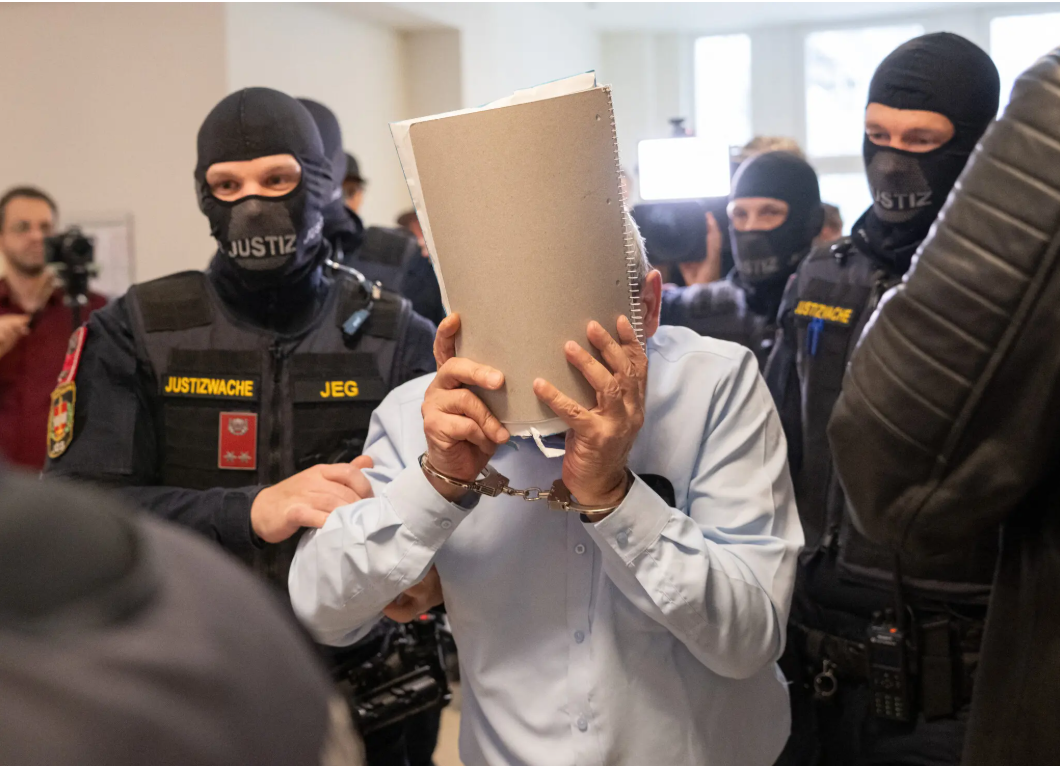
On 13 January, the Higher Regional Court in Koblenz, Germany found Anwar Raslan, a former colonel in the Syrian regime, guilty of co-perpetration of crimes against humanity in the form of torture, murder in 27 cases, assault in 25 cases, in addition to several counts of rape and sexual assault. The verdict carries a custodial sentence of life imprisonment. Raslan is so far the highest-ranking Syrian official convicted for crimes against humanity committed in the course of the Syrian conflict.
Raslan is convicted for his conduct as Head of Interrogations at Branch 251 of Syria’s General Intelligence Directorate between April 2011 and September 2012. Insider witnesses have described the branch as the most effective, dangerous and secretive branch of General Intelligence.
The court’s decision constitutes a landmark judgement, the significance of which extends far beyond the specifics of the individual case. The court has found that the crimes under examination were committed as part of the Syrian government’s widespread and systematic attack against its civilian population, which began in the early days of the country’s 2011 popular uprising.
CIJA has assisted the German Federal Police investigation of this case since 2017 and the prosecution since Raslan's arrest in 2019. This assistance drew on CIJA’s unprecedented evidence archive, secured by its investigators in Syria, and came in the form of documentary evidence, insider witness interviews as well as expert testimony. Of particular relevance to the case were over 600 documents linked to Branch 251, including General Intelligence directives and interrogation reports, some bearing Raslan's signature, as well as 13 interviews with former Branch employees. Further, CIJA was able to provide authorities with documentation and insider witness interviews about Raslan’s tenure as Head of Interrogations at a different General Intelligence branch - Branch 285, where abuse and torture have been documented.
In November 2020, CIJA’s Director of Operations and Investigations testified as an expert witness before the court in Koblenz. In an extensive two-day testimony, CIJA provided a thorough contextual analysis of the regime’s security-intelligence apparatus and its widespread and systematic use of torture in detention, the role of Branch 251 in suppressing dissent as well as Raslan’s individual criminal responsibility. The complex expert testimony drew on hundreds of CIJA-secured documents, which were entered into evidence at the request of the judges. In the course of over a hundred days of trial hearings, CIJA-secured evidence, analysis and testimony have been continuously referenced.
“This conviction is a critically important measure of justice for the survivors and victims of the Syrian regime. CIJA is honored to see its evidence was a foundational part of this historic conviction. As our investigators continue collecting evidence of Assad’s atrocities and tracking regime officials in Europe, we expect to see more such trials in the near future. Our thoughts are with our Syrian colleagues whose selfless work behind the scenes of the world’s most dangerous conflict continues to feed investigations and prosecutions in Europe.”
– Nerma Jelacic, CIJA Director for Management and External Relations
This is the second judgement addressing state-sponsored torture in Syria following the 2021 verdict in the case of Eyad, A, a former Syrian security-service agent and associate of Anwar Raslan at Branch 251, who was found guilty of aiding and abetting 30 counts of crimes against humanity committed in Damascus.
CIJA has been investigating crimes committed in Syria since 2012. Since then, its teams of Syrian investigators have amassed over 1,000,000 pages of Syrian regime documentation constituting the largest cache of documentary evidence ever secured in the course of an ongoing conflict. To date, CIJA’s analysts have answered over 600 requests for assistance from public authorities concerning over 2,000 individual targets. CIJA is currently cooperating with 15 ongoing investigations and provides continuous support to 36 law enforcement agencies from 13 countries.
On 13 January, the Higher Regional Court in Koblenz, Germany found Anwar Raslan, a former colonel in the Syrian regime, guilty of co-perpetration of crimes against humanity in the form of torture, murder in 27 cases, assault in 25 cases, in addition to several counts of rape and sexual assault. The verdict carries a custodial sentence of life imprisonment. Raslan is so far the highest-ranking Syrian official convicted for crimes against humanity committed in the course of the Syrian conflict.
Raslan is convicted for his conduct as Head of Interrogations at Branch 251 of Syria’s General Intelligence Directorate between April 2011 and September 2012. Insider witnesses have described the branch as the most effective, dangerous and secretive branch of General Intelligence.
The court’s decision constitutes a landmark judgement, the significance of which extends far beyond the specifics of the individual case. The court has found that the crimes under examination were committed as part of the Syrian government’s widespread and systematic attack against its civilian population, which began in the early days of the country’s 2011 popular uprising.
CIJA has assisted the German Federal Police investigation of this case since 2017 and the prosecution since Raslan's arrest in 2019. This assistance drew on CIJA’s unprecedented evidence archive, secured by its investigators in Syria, and came in the form of documentary evidence, insider witness interviews as well as expert testimony. Of particular relevance to the case were over 600 documents linked to Branch 251, including General Intelligence directives and interrogation reports, some bearing Raslan's signature, as well as 13 interviews with former Branch employees. Further, CIJA was able to provide authorities with documentation and insider witness interviews about Raslan’s tenure as Head of Interrogations at a different General Intelligence branch - Branch 285, where abuse and torture have been documented.
In November 2020, CIJA’s Director of Operations and Investigations testified as an expert witness before the court in Koblenz. In an extensive two-day testimony, CIJA provided a thorough contextual analysis of the regime’s security-intelligence apparatus and its widespread and systematic use of torture in detention, the role of Branch 251 in suppressing dissent as well as Raslan’s individual criminal responsibility. The complex expert testimony drew on hundreds of CIJA-secured documents, which were entered into evidence at the request of the judges. In the course of over a hundred days of trial hearings, CIJA-secured evidence, analysis and testimony have been continuously referenced.
“This conviction is a critically important measure of justice for the survivors and victims of the Syrian regime. CIJA is honored to see its evidence was a foundational part of this historic conviction. As our investigators continue collecting evidence of Assad’s atrocities and tracking regime officials in Europe, we expect to see more such trials in the near future. Our thoughts are with our Syrian colleagues whose selfless work behind the scenes of the world’s most dangerous conflict continues to feed investigations and prosecutions in Europe.”
– Nerma Jelacic, CIJA Director for Management and External Relations
This is the second judgement addressing state-sponsored torture in Syria following the 2021 verdict in the case of Eyad, A, a former Syrian security-service agent and associate of Anwar Raslan at Branch 251, who was found guilty of aiding and abetting 30 counts of crimes against humanity committed in Damascus.
CIJA has been investigating crimes committed in Syria since 2012. Since then, its teams of Syrian investigators have amassed over 1,000,000 pages of Syrian regime documentation constituting the largest cache of documentary evidence ever secured in the course of an ongoing conflict. To date, CIJA’s analysts have answered over 600 requests for assistance from public authorities concerning over 2,000 individual targets. CIJA is currently cooperating with 15 ongoing investigations and provides continuous support to 36 law enforcement agencies from 13 countries.
Wie der österreichische Verfassungsschutz Assads Schreckensgeneral versteckte
Der Spiegel reports on the failure of Austrian authorities to investigate and prosecute the highest-ranking Syrian regime member suspected of crimes against humanity and at large in Europe.
Read the full story here.
Der Spiegel reports on the failure of Austrian authorities to investigate and prosecute the highest-ranking Syrian regime member suspected of crimes against humanity and at large in Europe.
Read the full story here.
How a Syrian War Criminal and Double Agent Disappeared in Europe
The New Yorker investigates the circumstances surrounding the case of Khaled al-Halabi, the highest-ranking Syrian regime member suspected of crimes against humanity and known to be in Europe.
Read the full story here.
The New Yorker investigates the circumstances surrounding the case of Khaled al-Halabi, the highest-ranking Syrian regime member suspected of crimes against humanity and known to be in Europe.
Read the full story here.
CIJA Publishes its 2020-2021 Annual Report
CIJA is proud to present its 2020-2021 annual report and impressive achievements in evidence collection and support to criminal justice actors between April 2020 and March 2021. Along with a detailed outline of CIJA’s operational results, the report offers a comprehensive overview of our six-year programme in Northern Iraq, which concluded successfully in March 2021. To mark the extraordinary work of its Islamic State teams, CIJA is, for the first time, sharing summaries of key legal briefs in its collection showcasing the wealth of evidence collected during the course of CIJA operations in Northern Iraq and Syria.
CIJA is proud to present its 2020-2021 annual report and impressive achievements in evidence collection and support to criminal justice actors between April 2020 and March 2021. Along with a detailed outline of CIJA’s operational results, the report offers a comprehensive overview of our six-year programme in Northern Iraq, which concluded successfully in March 2021. To mark the extraordinary work of its Islamic State teams, CIJA is, for the first time, sharing summaries of key legal briefs in its collection showcasing the wealth of evidence collected during the course of CIJA operations in Northern Iraq and Syria.
Spinning Bomb
In an in-depth piece for Index on Censorship, CIJA Director Nerma Jelacic dissects the logic of revisionism, the institutions that enable it, and the perils of leaving disinformation and war crimes denialism unchallenged.
Read the article here
In an in-depth piece for Index on Censorship, CIJA Director Nerma Jelacic dissects the logic of revisionism, the institutions that enable it, and the perils of leaving disinformation and war crimes denialism unchallenged.
Read the article here
CIJA Senior Advisor Stephanie Barbour contributes to symposium on conflict-related sexual violence
CIJA Senior Sexual and Gender-based Violence Advisor Stephanie Barbour has contributed to a symposium on conflict-related sexual violence jointly hosted by the UN Team of Experts on Rule of Law and Sexual Violence in Conflict and OpinioJuris. Drawing on her recent article in the Journal of International Criminal Justice, Barbour discusses CIJA’s investigative and analytical approaches to Islamic State enslavement practices.
Part I of the blog post explores innovations, lessons learned, and good practices from CIJA’s investigation into the IS slave trade. Barbour addresses the challenges of investigating the slave trade of women and children by IS in Northern Iraq and Syria and outlines the elements of CIJA´s large-scale situational investigation model, which enabled the collection of critical multi-layered, corroborative evidence of IS enslavement practices.
In Part II, Barbour discusses CIJA’s approach to the legal characterisation of IS enslavement practices and the importance of these labels for capturing the multiple harms that have been inflicted on victims. Barbour follows with an appraisal of recent prosecutorial approaches to SGBV charging in extraterritorial cases concerning IS and Syrian Regime crimes, including in the Al-Khatib trial in Koblenz, Germany. The two-part post closes by emphasising the importance of continued exchanges between investigators and prosecutors working across jurisdictions on how to make the best use of available evidence and find appropriate legal qualifications for the multiplicity of SGBV-related crimes observed in the Syria and Iraq conflicts.
The symposium builds on a recent discussion hosted by the UN Team of Experts held in January 2021 and entitled “The importance of a label: understanding the impunity gap for conflict-related sexual violence crimes associated with slavery and trafficking”.
Read Part I here: Innovations, Lessons Learned, and Good Practices From CIJA’s Investigation Into the Slave Trade
Read Part II here: Key findings of CIJA’s Investigation into the IS Slave Trade
CIJA Senior Sexual and Gender-based Violence Advisor Stephanie Barbour has contributed to a symposium on conflict-related sexual violence jointly hosted by the UN Team of Experts on Rule of Law and Sexual Violence in Conflict and OpinioJuris. Drawing on her recent article in the Journal of International Criminal Justice, Barbour discusses CIJA’s investigative and analytical approaches to Islamic State enslavement practices.
Part I of the blog post explores innovations, lessons learned, and good practices from CIJA’s investigation into the IS slave trade. Barbour addresses the challenges of investigating the slave trade of women and children by IS in Northern Iraq and Syria and outlines the elements of CIJA´s large-scale situational investigation model, which enabled the collection of critical multi-layered, corroborative evidence of IS enslavement practices.
In Part II, Barbour discusses CIJA’s approach to the legal characterisation of IS enslavement practices and the importance of these labels for capturing the multiple harms that have been inflicted on victims. Barbour follows with an appraisal of recent prosecutorial approaches to SGBV charging in extraterritorial cases concerning IS and Syrian Regime crimes, including in the Al-Khatib trial in Koblenz, Germany. The two-part post closes by emphasising the importance of continued exchanges between investigators and prosecutors working across jurisdictions on how to make the best use of available evidence and find appropriate legal qualifications for the multiplicity of SGBV-related crimes observed in the Syria and Iraq conflicts.
The symposium builds on a recent discussion hosted by the UN Team of Experts held in January 2021 and entitled “The importance of a label: understanding the impunity gap for conflict-related sexual violence crimes associated with slavery and trafficking”.
Read Part I here: Innovations, Lessons Learned, and Good Practices From CIJA’s Investigation Into the Slave Trade
Read Part II here: Key findings of CIJA’s Investigation into the IS Slave Trade
Berlin Group 21, 'Ivan's' Emails and Chemical Weapons Conspiracy Theories
Supported by the findings of CIJA’s probe into Syria disinformation networks, Bellingcat reports on the working methods of yet another group in the far-reaching web of actors targeting Syria accountability groups – Berlin Group 21. Read more about the latest revelations stemming from CIJA’s investigation here.
Supported by the findings of CIJA’s probe into Syria disinformation networks, Bellingcat reports on the working methods of yet another group in the far-reaching web of actors targeting Syria accountability groups – Berlin Group 21. Read more about the latest revelations stemming from CIJA’s investigation here.
CIJA on the Foreign Office Podcast
CIJA Director Nerma Jelacic speaks to Michael Weiss about the motivation behind CIJA’s investigation into a Russian-back disinformation network on Syria and discusses the significance of its findings.
Listen here
CIJA Director Nerma Jelacic speaks to Michael Weiss about the motivation behind CIJA’s investigation into a Russian-back disinformation network on Syria and discusses the significance of its findings.
Listen here
How an Email Sting Operation Unearthed a pro-Assad Conspiracy—and Russia’s Role In It
Newlines Magazine has published an extensive report on the web of actors uncovered by CIJA to be part of a highly orchestrated disinformation campaign against the OPCW and their investigations into war crimes in Syria.
Read Michael Weiss and Jett Goldsmith’s reporting on CIJA’s probe into the Working Group on Syria, Propaganda and the Media and their allies in Russian diplomatic missions around the world and lawyers working at the heart of international justice institutions.
Newlines Magazine has published an extensive report on the web of actors uncovered by CIJA to be part of a highly orchestrated disinformation campaign against the OPCW and their investigations into war crimes in Syria.
Read Michael Weiss and Jett Goldsmith’s reporting on CIJA’s probe into the Working Group on Syria, Propaganda and the Media and their allies in Russian diplomatic missions around the world and lawyers working at the heart of international justice institutions.
Syria Chemical-Attack Deniers Admit Links to WikiLeaks and Russia
The Daily Beast reports on further findings of CIJA’s probe into the so-called Working Group on Syria, Propaganda and the Media’s disinformation campaign against organisations collecting battlefield evidence of war crimes in Syria – OPCW, White Helmets, and now CIJA.
Read Michael Weiss and Jett Goldsmith’s exposé to find out how their efforts were coordinated with Russian diplomats and aided by WikiLeaks and Hague-based lawyers.
The Daily Beast reports on further findings of CIJA’s probe into the so-called Working Group on Syria, Propaganda and the Media’s disinformation campaign against organisations collecting battlefield evidence of war crimes in Syria – OPCW, White Helmets, and now CIJA.
Read Michael Weiss and Jett Goldsmith’s exposé to find out how their efforts were coordinated with Russian diplomats and aided by WikiLeaks and Hague-based lawyers.
CIJA Joins Call for Greater Accountability for Atrocities in Syria
On the eve of next week’s Conference of the States Parties of the Organisation for the Prohibition of Chemical Weapons (OPCW), CIJA has joined 14 Syrian and international organisations urging states to adopt enhanced justice and accountability measures in response to atrocity crimes in Syria.
Signatories call on states to “explore individual and collective options to hold more perpetrators to account—by widening the scope of criminal jurisdiction, providing greater resources for victim and witness protection, greater resources for war crimes prosecutors, and considering the creation of a treaty-based tribunal for Syria”. While the statement acknowledges recent advances towards criminal-justice accountability, such as the first crimes against humanity verdict against a former Syrian Regime member, it stresses that “justice is still not commensurate to the injustices suffered” by the Syrian people. The joint statement further urges that states demand immediate release of detainees from Regime detention centres and information on the fates of disappeared persons, while supporting measures to provide greater psychological support for survivors.
At the upcoming OPCW session, states parties will discuss a 46-state backed proposal to suspend Syria’s rights and privileges in the organisation over its use of chemical weapons. The Assad Regime’s responsibility for chemical weapons attacks has been investigated by the OPCW’s Investigation and Identification Team (IIT). CIJA is proud to have assisted the IIT by providing evidentiary and analytical materials in support of the Team’s first investigation and subsequent report on the role of the Syrian Arab Air Force in the incidents in Ltamenah, Syria in March 2017.
CIJA has been conducting criminal investigations in Syria since 2011. Thus far, CIJA has collected over one million pages of Syrian regime documentation and it is currently supporting thirty-two law enforcement agencies from over a dozen democratic countries in addition to a number of multilateral bodies. CIJA’s evidence and testimony have been used in five completed trials pertaining to both Syrian regime and Islamic State criminality. Additionally, CIJA is currently assisting fifteen ongoing investigations by law enforcement agencies.
Read the full statement here: Joint Statement in Advance of the 25th Session of the Conference of the States Parties of the Organisation for the Prohibition of Chemical Weapons (OPCW)
On the eve of next week’s Conference of the States Parties of the Organisation for the Prohibition of Chemical Weapons (OPCW), CIJA has joined 14 Syrian and international organisations urging states to adopt enhanced justice and accountability measures in response to atrocity crimes in Syria.
Signatories call on states to “explore individual and collective options to hold more perpetrators to account—by widening the scope of criminal jurisdiction, providing greater resources for victim and witness protection, greater resources for war crimes prosecutors, and considering the creation of a treaty-based tribunal for Syria”. While the statement acknowledges recent advances towards criminal-justice accountability, such as the first crimes against humanity verdict against a former Syrian Regime member, it stresses that “justice is still not commensurate to the injustices suffered” by the Syrian people. The joint statement further urges that states demand immediate release of detainees from Regime detention centres and information on the fates of disappeared persons, while supporting measures to provide greater psychological support for survivors.
At the upcoming OPCW session, states parties will discuss a 46-state backed proposal to suspend Syria’s rights and privileges in the organisation over its use of chemical weapons. The Assad Regime’s responsibility for chemical weapons attacks has been investigated by the OPCW’s Investigation and Identification Team (IIT). CIJA is proud to have assisted the IIT by providing evidentiary and analytical materials in support of the Team’s first investigation and subsequent report on the role of the Syrian Arab Air Force in the incidents in Ltamenah, Syria in March 2017.
CIJA has been conducting criminal investigations in Syria since 2011. Thus far, CIJA has collected over one million pages of Syrian regime documentation and it is currently supporting thirty-two law enforcement agencies from over a dozen democratic countries in addition to a number of multilateral bodies. CIJA’s evidence and testimony have been used in five completed trials pertaining to both Syrian regime and Islamic State criminality. Additionally, CIJA is currently assisting fifteen ongoing investigations by law enforcement agencies.
Read the full statement here: Joint Statement in Advance of the 25th Session of the Conference of the States Parties of the Organisation for the Prohibition of Chemical Weapons (OPCW)
Mayday Podcast: The Evidence Gatherers
The BBC’s Chloe Hadjimatheou spoke with Bill Wiley and Nerma Jelacic about CIJA’s probe into disinformation networks attempting to discredit Syria accountability efforts.
Listen to the podcast here
The BBC’s Chloe Hadjimatheou spoke with Bill Wiley and Nerma Jelacic about CIJA’s probe into disinformation networks attempting to discredit Syria accountability efforts.
Listen to the podcast here